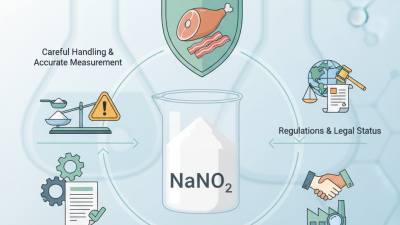
Choosing Industrial Sodium Nitrite for global supply requires more than comparing prices. Buyers need consistent purity, dependable production, and clear documentation. The material may arrive as white crystalline granules or powder, packed in moisture-resistant bags. Small differences in particle condition can affect weighing, storage, and downstream processing. Reliable suppliers provide batch certificates, traceability records, packaging specifications, and practical handling guidance. They also understand export documentation and regional compliance requirements.
Process-safety expert Dr. Trevor Kletz wrote, “If you think safety is expensive, try ignorance.” This warning applies strongly to Industrial Sodium Nitrite procurement. Safe supply depends on controlled storage, trained personnel, accurate labeling, and separation from incompatible materials. A capable supplier should explain these controls clearly, not hide them behind technical language. It should also maintain stable production during seasonal demand, port delays, and changing logistics conditions. Global sourcing is never perfectly predictable. That deserves honest discussion.
Experience matters here. A supplier may offer an attractive quotation, yet weak traceability can create costly uncertainty later. Buyers should review sample test results, production capacity, lead times, and emergency communication procedures. They should ask difficult questions before placing large orders. Which quality parameters remain stable between batches? How are damaged packages handled? Can the supplier support an unexpected inspection?
The strongest choice combines chemical consistency with responsible service. Industrial Sodium Nitrite should be purchased through a transparent, qualified supply chain. Cost matters, but reliability protects the entire operation. That protection is measurable.
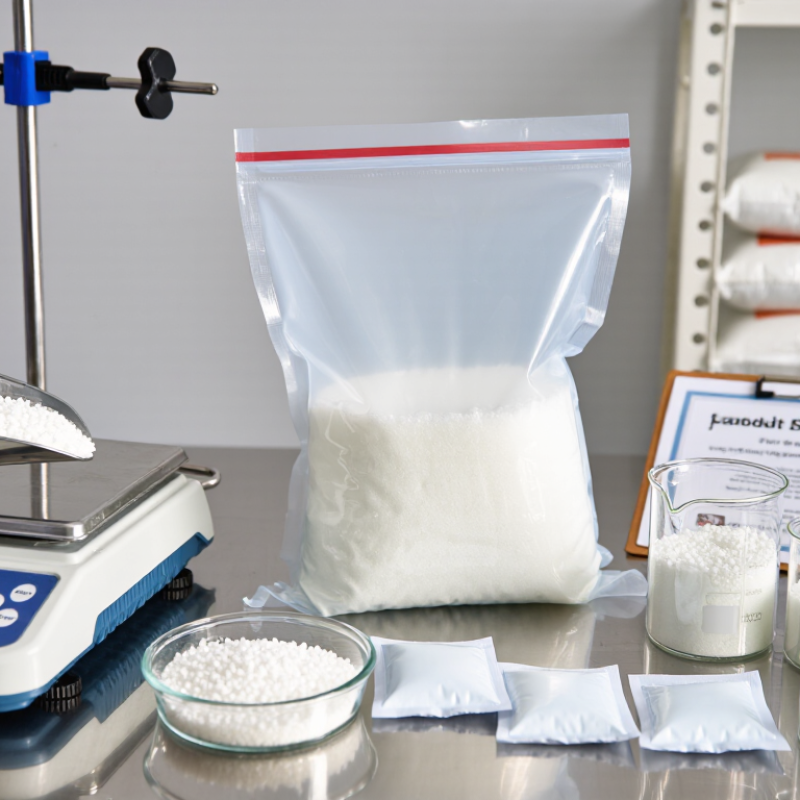
Industrial sodium nitrite is an inorganic salt with the formula NaNO2. It usually appears as white to slightly yellow crystalline granules. The material dissolves readily in water and supports several industrial processes. It is used in corrosion-inhibiting solutions, metal treatment, chemical manufacturing, and selected construction applications. Its performance depends on purity, moisture content, particle size, and storage conditions.
In plant procurement, buyers often check the certificate of analysis before discussing price. That document should show sodium nitrite content, impurities, moisture, and packaging details. Reliable suppliers also provide batch traceability and transport guidance. A dry warehouse matters. Damp storage can cause caking and weaken handling efficiency. Clean, sealed packaging helps preserve product quality during long-distance shipment.
Industrial sodium nitrite is not automatically suitable for every application. Food-related use requires separate regulatory approval and food-grade certification. This distinction is sometimes overlooked. It should not be. Safe handling requires trained workers, protective equipment, ventilation, and clear labeling. Sodium nitrite should remain away from incompatible materials, especially strong acids and uncontrolled heat. Global supply planning also needs realistic lead times, customs documents, and backup inventory. Specifications may appear complete, yet application trials can reveal unexpected differences between batches. That is why technical review should continue after delivery, not end with the purchase order.

Industrial sodium nitrite is an inorganic salt with the chemical formula NaNO₂ and a molar mass of 68.995 g/mol. Its consistent chemical composition supports quality control, specification management, and reliable procurement across industrial applications.
The chart shows the theoretical mass contribution of each element in anhydrous sodium nitrite, calculated from standard atomic weights: sodium contributes 33.3%, nitrogen 20.3%, and oxygen 46.4%. This fixed composition helps industrial buyers compare material specifications consistently across global supply channels.
Industrial sodium nitrite is manufactured through controlled absorption of nitrogen oxides in an alkaline solution. A typical reaction uses sodium hydroxide, nitric oxide, and nitrogen dioxide to form sodium nitrite and water.
Production teams closely control gas composition, temperature, pH, and oxygen exposure. Excess nitrogen dioxide can increase nitrate formation, reducing product yield. The liquid is then filtered, concentrated, crystallized, centrifuged, and dried. ECHA’s substance dossier reports a molecular mass of 69.00 g/mol for sodium nitrite. This figure supports accurate dosing and quality checks during crystallization.
Process safety cannot be treated as a paperwork exercise. The US EPA’s AP-42 guidance highlights absorption and nitrogen-oxide control as important operations in related inorganic nitrogen processes. The UN Model Regulations classify sodium nitrite as UN 1500, Class 5.1, an oxidizing solid. Packaging must therefore prevent contamination with combustible materials.
Industrial sodium nitrite supports several demanding processes beyond basic chemical manufacturing. Its main applications include corrosion inhibition, metal treatment, rubber processing, concrete additives, and controlled heat-transfer systems. In closed-loop cooling equipment, it helps protect steel surfaces from oxidation. A small dosage can reduce costly pitting inside pipes and storage tanks. However, concentration control matters. Too little protection fails; too much may increase treatment costs.
The global market reflects this broad industrial role. Grand View Research’s Sodium Nitrite Market Size, Share & Trends Analysis Report, 2024–2030, identifies chemicals, pharmaceuticals, food processing, and metal treatment as major application sectors. The report also expects steady market growth through 2030, supported by expanding manufacturing and infrastructure activity. In practical purchasing, consistent purity is more valuable than a low headline price. Batch testing should check assay, moisture, chloride content, and packaging integrity.
The U.S. Environmental Protection Agency’s industrial chemical guidance emphasizes documented handling controls and exposure prevention. This is important during unloading, weighing, and solution preparation. Dry crystals can look harmless. They are not. Global buyers also need reliable export documentation, traceability, and climate-resistant packaging. Supply planning remains imperfect, especially when transport delays affect production schedules. Local storage capacity, dual sourcing, and clear technical specifications can reduce that risk. The best specification is not always the most demanding one; it must match the actual process.
| Industrial Application | Primary Function | Typical Products or Processes | Why Industrial-Grade Material Is Selected | Key Quality Considerations | Supply and Handling Notes |
|---|---|---|---|---|---|
| Heat-transfer systems | Acts as a corrosion inhibitor in selected closed-loop heating and cooling systems. | Closed-loop water treatment, industrial heating circuits, and process-cooling systems. | Provides consistent chemical performance when correctly formulated with other treatment chemicals. | Assay, chloride level, moisture, insoluble matter, and compatibility with system metals. | Store in a cool, dry, well-ventilated area away from acids, combustible materials, and reducing agents. |
| Metal treatment and corrosion protection | Supports passivation and corrosion-control formulations for certain ferrous-metal systems. | Industrial maintenance chemicals, metal-cleaning formulations, and corrosion-inhibitor blends. | Reliable purity helps improve formulation control and repeatability across production batches. | Chemical purity, solution clarity, low insoluble content, and controlled impurity profile. | Use according to the formulation’s technical specification and applicable workplace regulations. |
| Construction and concrete additives | Used in selected admixture systems, including formulations designed to support concrete performance in cold conditions. | Concrete admixtures, cement-related chemical systems, and construction-site formulations. | Uniform granulation and concentration can support accurate dosing in large-scale production. | Assay, particle size, moisture, solubility, and compatibility with cement and other admixture components. | Application rates must be established through product testing and local construction requirements. |
| Rubber and polymer processing | Serves as a chemical intermediate or processing ingredient in certain specialty formulations. | Rubber chemicals, polymer intermediates, and specialty chemical production. | Stable quality supports controlled reactions and helps reduce batch-to-batch variation. | Assay, alkalinity or acidity, moisture, trace metals, and reaction compatibility. | Technical documentation and safety data should accompany international shipments. |
| Dye, pigment, and chemical manufacturing | Functions as a nitrosating or oxidizing reagent and as an intermediate in inorganic and organic synthesis. | Azo-dye intermediates, pigments, specialty chemicals, and selected pharmaceutical intermediates. | Predictable reactivity and low impurity levels are important for process yield and product color consistency. | Assay, nitrite content, moisture, chloride, sulfate, heavy metals, and insoluble matter. | Avoid contact with strong acids because toxic nitrogen oxides may be generated. |
| Textile processing | Supports the manufacture of dye intermediates and selected textile chemical systems. | Dyeing auxiliaries, colorant production, and specialty textile chemicals. | Consistent composition helps maintain repeatable shade and process performance. | Purity, solubility, moisture, color, and compatibility with the production process. | Packaging should protect the product from humidity and contamination during transport and storage. |
| Food curing and preservation | Used in regulated curing processes to help control certain microorganisms and develop characteristic cured-meat color and flavor. | Cured meat and selected regulated food-processing applications. | Only food-grade material with documented compliance is appropriate for this application. | Food-grade specification, assay, contaminant limits, traceability, and compliance with local maximum-use levels. | Industrial-grade material must not be used in food applications unless it specifically meets applicable food regulations. |
| Pharmaceutical and laboratory synthesis | Used as a reagent or intermediate in controlled chemical synthesis and analytical procedures. | Selected active-ingredient intermediates, analytical reagents, and research chemicals. | Higher and application-specific grades provide tighter control of impurities and documentation. | Pharmacopoeial or customer specification, trace impurities, assay, moisture, and batch traceability. | Grade selection must match the intended use; industrial grade is not automatically suitable for pharmaceutical production. |
Industrial sodium nitrite supports global supply chains through consistent quality, flexible applications, and manageable logistics. Manufacturers use it in corrosion control, metal treatment, and selected construction processes. Each application requires controlled purity and dependable batch performance. Consistency matters.
Reliable suppliers provide certificates of analysis, safety data sheets, and batch traceability. These documents help procurement teams verify specifications before shipment. Moisture-resistant packaging protects the material during storage and ocean transport. Clear labeling also reduces delays during customs inspections. Small details matter.
Global sourcing is never completely smooth. A delayed port, incomplete document, or sudden freight shortage can disrupt production schedules. Buyers should compare lead times, packaging options, and emergency support before placing large orders. They should also confirm storage conditions with qualified safety personnel. This step is sometimes overlooked.
Industrial sodium nitrite can support regional warehouses and multi-country purchasing plans. Standardized specifications make supplier changes less disruptive. However, lower price alone should not decide the purchase. A cheaper shipment may bring inconsistent quality or added inspection costs. Practical procurement balances cost, technical evidence, compliance, and delivery reliability. That balance keeps production moving across borders.
Industrial sodium nitrite can support reliable global supply when buyers assess more than price and availability. Quality begins with a recent Certificate of Analysis from an accountable producer. Check assay, moisture, chloride, heavy metals, and visible contamination. A clean white crystal is useful evidence, but appearance alone proves little.
Safety records deserve equal attention. Request the current Safety Data Sheet, hazard classification, emergency guidance, and packaging specifications. Confirm that containers are sealed, clearly labeled, and suitable for the planned storage period. Transport documents should match the shipment and destination requirements. Compliance also varies by market. Buyers should verify chemical registration, import controls, labeling rules, and local workplace obligations before ordering. A supplier’s confident email is not regulatory proof.
Tips: Compare several recent batches, not one perfect report. Ask how samples are retained and tested. Review the supplier’s quality system, traceability process, and change-notification policy. Small details matter, such as pallet protection, moisture barriers, and legible batch numbers. I would also request an independent test for the first shipment. It may feel excessive. It can expose gaps early. Some buyers overlook production consistency because the specification looks complete, yet inconsistent moisture or packaging can create handling problems. Quality should be judged through documented evidence, practical checks, and transparent communication.