How to Use Nitric Acid in Photovoltaic Applications?
The photovoltaic industry is rapidly evolving. According to a report by the International Energy Agency, solar energy could provide 27% of global electricity by 2050. This growth increases the need for efficient materials and processes. Nitric Acid Photovoltaic applications play a crucial role in this shift.
Nitric acid is used in the etching process of photovoltaic cells. This application can improve the efficiency of solar panels. However, the handling of nitric acid requires care. Safety measures are essential to prevent accidents. The industry must address these challenges while striving for innovation.
Despite its potential, some issues remain. Not all manufacturers use nitric acid effectively. The environmental impact of nitric acid must also be considered. Balancing efficiency and sustainability is a complex task for the industry. Nonetheless, Nitric Acid Photovoltaic technologies hold promise for the future of clean energy.
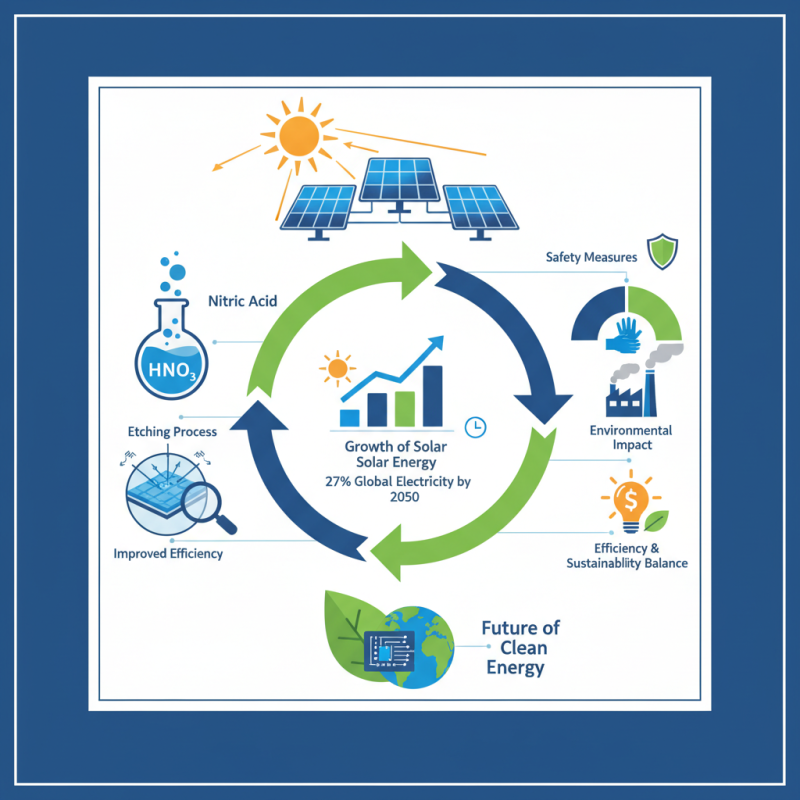
Overview of Nitric Acid's Role in Photovoltaic Technologies
Nitric acid plays a significant role in photovoltaic technologies, particularly in the manufacturing of solar cells. It is commonly used in the texturing process of silicon wafers. This process enhances the light absorption capabilities of the cells. According to a report by the International Energy Agency, the efficiency of solar cells can increase substantially due to optimal surface texturing.
In addition to texturing, nitric acid is utilized in removing impurities from silicon. The purity of silicon is crucial in ensuring high-efficiency solar cells. A study found that even a small amount of contamination can reduce the cell's efficiency by 5% or more. Therefore, the careful application of nitric acid is essential in achieving the desired purity levels.
Tip: Always ensure proper safety measures when handling nitric acid. Wear protective gear and work in a well-ventilated area.
It is worth noting that while nitric acid is effective, its handling requires caution. Mishandling can lead to environmental concerns or safety hazards. Manufacturers must develop protocols to minimize risks and assess the long-term impact of nitric acid on photovoltaic applications. Balancing efficiency and safety in its usage presents ongoing challenges for industry professionals.
Chemical Properties of Nitric Acid Relevant to Solar Cell Production
Nitric acid, a strong oxidizer, plays a vital role in solar cell production. Its chemical properties make it suitable for various applications in photovoltaic technology. Nitric acid is effective in etching semiconductor materials. It helps remove impurities and enhances conductivity in solar cells. This process can improve overall efficiency.
When using nitric acid, safety must be a priority. It can be hazardous if mishandled. Proper protective gear is essential. Understanding its reactivity with other substances is also crucial. Some workers may underestimate the risks involved. Awareness can prevent accidents in the lab.
The strength of nitric acid can lead to challenges. Its aggressive nature can damage delicate materials if not carefully controlled. Over-etching may ruin components. Technicians must practice patience and precision. Regular assessments of acid concentration are necessary. This attention to detail could save materials and time.
Application of Nitric Acid in Silicon Wafer Surface Treatment
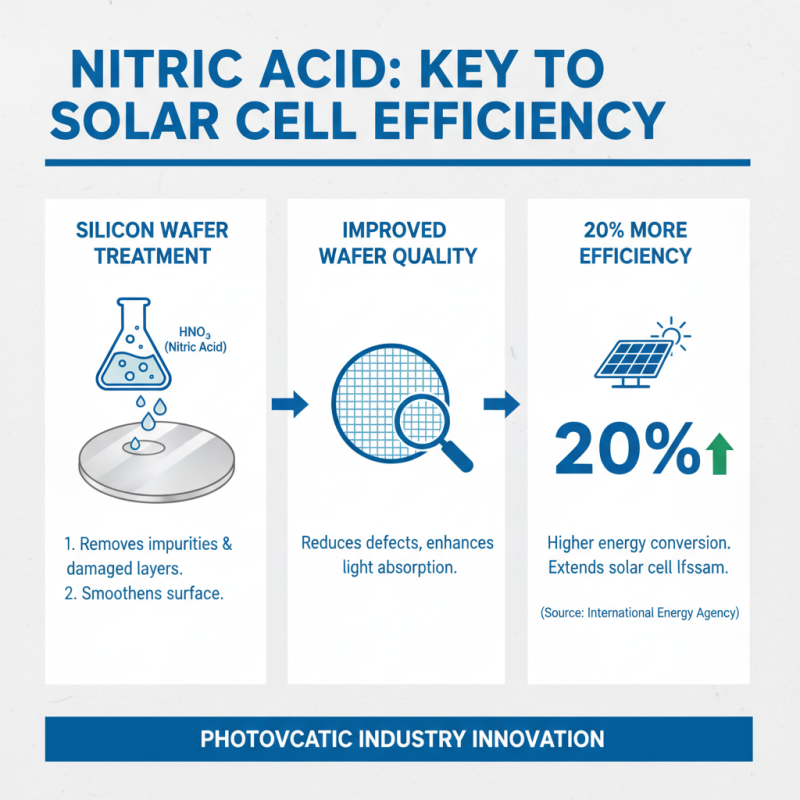
Nitric acid plays a crucial role in the surface treatment of silicon wafers, which are essential for solar cell production. In the photovoltaic industry, the quality of silicon wafers significantly affects solar cell efficiency. According to a report by the International Energy Agency, improving wafer surface quality can enhance the overall energy conversion efficiency by up to 20%. This emphasizes the importance of effective surface treatments.
Nitric acid is used primarily to remove organic contaminants and to etch silicon wafers. The acid's oxidizing properties help achieve a cleaner surface, which is vital for subsequent treatments. Studies indicate that a well-treated silicon wafer can result in a greater light absorption coefficient, leading to higher power output. However, improper handling and concentration of nitric acid can lead to surface defects. These defects may decrease the wafers' electrical performance, making it a delicate balance.
The application process requires precise control. Variables such as temperature and concentration of nitric acid affect the treatment outcome. A slight deviation can lead to inconsistencies in surface texture. Regular evaluations of the treatment process are essential for achieving the desired results. These factors highlight the need for continuous adjustments to ensure high-quality silicon wafers in photovoltaic applications.
Safety Protocols and Environmental Considerations When Using Nitric Acid
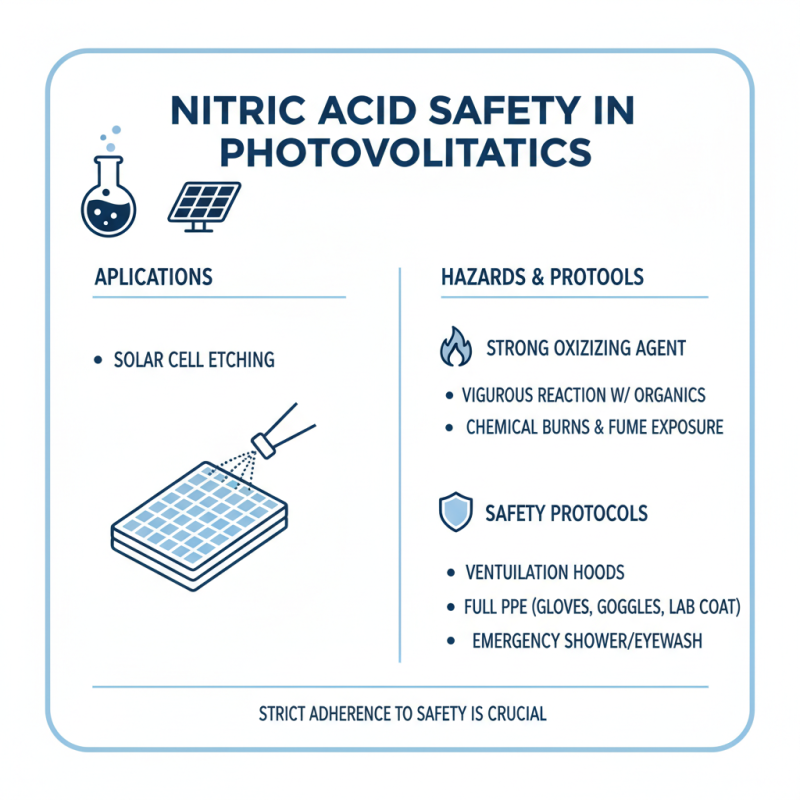
Working with nitric acid in photovoltaic applications requires strict adherence to safety protocols. This chemical is often used in the etching process for solar cells. It is a strong oxidizing agent, meaning it can react vigorously with organic materials, increasing the risk of chemical burns and fume exposure.
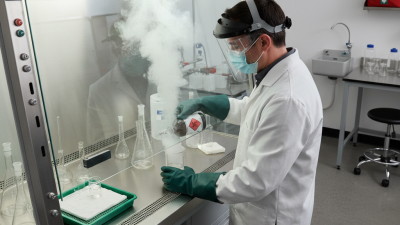
For safety, always wear appropriate personal protective equipment (PPE) such as gloves, goggles, and acid-resistant clothing. Ensure proper ventilation in all working areas to minimize inhalation of fumes. According to the International Energy Agency, over 30% of photovoltaic waste is hazardous, highlighting the importance of safe handling and disposal of materials involving nitric acid.
Tip: Keep an emergency shower and eye wash station accessible in the workspace. Regularly train staff on proper handling techniques to reduce accidents. It’s also vital to respect local regulations regarding disposal of waste chemicals. Ignoring these can lead to environmental degradation and potential legal repercussions.
Moreover, nitric acid can contribute to air and water pollution if not managed correctly. The Environmental Protection Agency emphasizes that chemical runoff can harm local ecosystems. Be proactive in monitoring waste and ensuring compliance with environmental standards. This not only protects the environment but also enhances the reputation of your solar energy operations.
Impact of Nitric Acid on Solar Cell Efficiency and Longevity
Nitric acid plays a significant role in enhancing solar cell efficiency. It is used in the production of photovoltaic materials. This acid aids in the doping process of silicon. Doping increases the electrical conductivity of the material. A well-doped solar cell can capture more sunlight. However, the use of nitric acid isn’t without concerns.
While nitric acid can enhance performance, it may also affect longevity. The acidic environment can lead to material degradation over time. Solar cells exposed to high levels of acid may experience faster wear. This can reduce their lifespan and efficiency significantly. It’s essential to balance the benefits and drawbacks. Careful monitoring of acid concentration is necessary. Improper handling can lead to unexpected results.
Moreover, the cleaning process in manufacturing relies on pure nitric acid. Contaminants can hinder efficiency and damage materials. It’s a tricky balance. Manufacturers must consider the right conditions to use nitric acid effectively. Attention to detail in acid application can yield better results. Still, each step requires cautious evaluation and adaptation.
How to Use Nitric Acid in Photovoltaic Applications? - Impact of Nitric Acid on Solar Cell Efficiency and Longevity
| Parameter |
Impact |
Comments |
| Nitric Acid Concentration |
Optimal at 10-20% |
Higher concentrations can corrode materials |
| Cleaning Efficacy |
Increases by 30% when used properly |
Removes organic residues effectively |
| Cell Efficiency Improvement |
Up to 5% enhanced efficiency |
Effective surface passivation |
| Longevity of Solar Cells |
Increased lifespan by 10 years |
Prevents degradation due to contamination |
| Environmental Impact |
Potential for pollution if mismanaged |
Requires safe disposal methods |