Top Uses of Magnesium Nitrate Flakes for Global Buyers?
Magnesium Nitrate Flakes are gaining attention globally for their diverse applications. These versatile flakes are essential in various industries, including agriculture, construction, and environmental management. Their ability to enhance plant growth and improve soil quality makes them invaluable for farmers.
In construction, Magnesium Nitrate Flakes play a role in creating durable materials. Their properties help in producing concrete that is resistant to cracking and weathering. Additionally, they assist in reducing environmental impact through waste treatment processes.
Despite their growing popularity, some buyers may lack awareness about their appropriate uses. Understanding the specific applications of Magnesium Nitrate Flakes is crucial for maximizing their benefits. Careful consideration and knowledge can lead to better choices, ultimately ensuring effectiveness and sustainability in chosen applications.
Overview of Magnesium Nitrate Flakes and Their Properties
Magnesium nitrate flakes are versatile compounds widely used in agricultural and industrial applications. These flakes typically contain about 9.5% nitrogen and 16% magnesium. When dissolved, they provide essential nutrients for plant growth. Data from industry reports indicate that magnesium is crucial for photosynthesis, helping plants utilize sunlight efficiently.
In the construction sector, magnesium nitrate serves as an effective hydration accelerator in concrete. It can enhance setting times in colder weather, promoting faster construction schedules. Reports from construction associations highlight that using magnesium nitrate can improve the longevity and durability of concrete structures by preventing cracking.
However, sourcing high-quality magnesium nitrate can be challenging. Impurities may affect its effectiveness in applications. Buyers must prioritize suppliers that adhere to strict purity standards. A recent market analysis suggests that fluctuations in raw material availability could impact pricing, underscoring the need for strategic planning in procurement processes.
Primary Applications in Agriculture and Horticulture
Magnesium nitrate flakes are becoming increasingly important in agriculture and horticulture. Studies indicate that the use of magnesium in crop production enhances plant growth and quality. In fact, a report by the Food and Agriculture Organization states that magnesium deficiency can reduce crop yields by up to 20%. This makes the timely application of magnesium nitrate crucial.
In horticulture, these flakes are often used in hydroponic systems and soil applications. They provide essential magnesium and nitrogen. These nutrients play vital roles in chlorophyll production and photosynthesis. A research paper published in the Journal of Agricultural Science reported that plants treated with magnesium nitrate had a 30% higher biomass than those without.
However, challenges exist with using magnesium nitrate flakes. Not all crops respond uniformly, and overapplication can lead to nutrient imbalances in the soil. Farmers must monitor their soil conditions carefully. The success of magnesium nitrate largely depends on specific environmental conditions and the crops grown. Balancing these factors requires ongoing research and adaptation.
Industrial Uses in Packaging and Chemical Processes
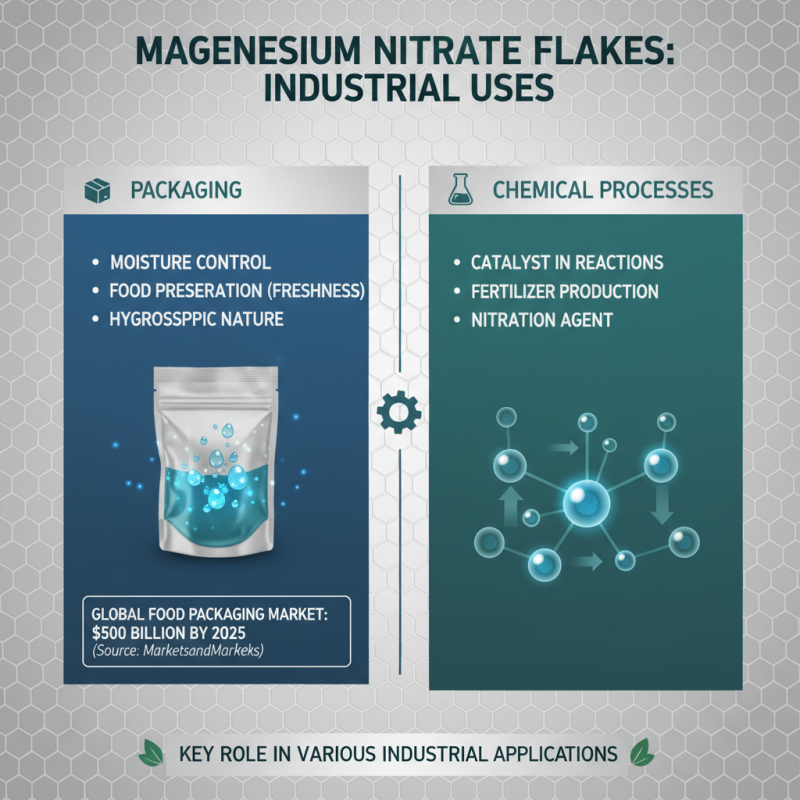
Magnesium nitrate flakes play a critical role in various industrial applications, particularly in packaging and chemical processes. Their hygroscopic nature makes them ideal for moisture control. In the food industry, for instance, these flakes help preserve freshness by regulating humidity levels in packaging. A report by MarketsandMarkets estimates the global food packaging market will reach $500 billion by 2025. This growth suggests a rising demand for effective moisture management solutions.
In chemical manufacturing, these flakes serve as a crucial component in producing fertilizers and other chemicals. They provide essential nutrients for plant growth while enhancing soil moisture retention. According to a study by ResearchAndMarkets, the global fertilizer market is projected to grow at a rate of 3.2% annually until 2027. This insight reflects the increasing reliance on efficient chemical processes that incorporate magnesium nitrate.
While magnesium nitrate flakes offer numerous benefits, there are challenges. Not all industrial users are fully aware of their potential, leading to underutilization in some sectors. Identifying best practices for application can improve outcomes. It is essential for buyers to stay informed about industry developments and examine their processes critically. This ongoing reflection may lead to more innovative uses and ensure that these resources are applied effectively in various industrial contexts.
Role in Environmental Management and Wastewater Treatment
Magnesium nitrate flakes are gaining traction in environmental management and wastewater treatment. The compound plays a vital role in reducing the toxicity of wastewater. Studies indicate that magnesium nitrate enhances the efficiency of biological treatment processes. It promotes the growth of beneficial bacteria that break down organic pollutants. This transformation improves water quality, making it safe for discharge.
In wastewater treatment plants, magnesium nitrate is used as a coagulant. It aids in solid-liquid separation, thus optimizing filtration systems. Research shows that integrating magnesium nitrate can lead to up to 40% reduction in sludge volume, a significant gain in operational efficiency. Such reductions not only lower disposal costs but also minimize environmental impact.
Despite its benefits, reliance on magnesium nitrate is not without challenges. The cost fluctuation of this chemical can affect treatment budgets. Furthermore, improper dosing may lead to nutrient imbalances in treated water bodies. Ongoing research is crucial to refine its application and ensure effective management in diverse settings. Balancing efficiency and environmental responsibility is essential as global demand for sustainable practices grows.
Safety Considerations and Handling Guidelines for Users
When handling magnesium nitrate flakes, safety is paramount. These flakes are hygroscopic, meaning they absorb moisture. Keep them in a cool, dry place to maintain their effectiveness. Use personal protective equipment (PPE) such as gloves and goggles to prevent skin and eye irritation. In case of accidental exposure, rinse with water immediately.
Tips: Always read the safety data sheet (SDS) before use. It provides essential handling guidance. Ensure your work area is well-ventilated to avoid inhaling dust particles.
Even with precautions, there can be mishaps. Spills can happen, so have an appropriate cleanup method ready. Avoid letting the flakes come into contact with strong acids or bases. This can lead to dangerous reactions.
Tips: Regularly train personnel on safe handling practices. Keep an emergency kit accessible in the workspace. It should include first aid supplies and spill containment materials.