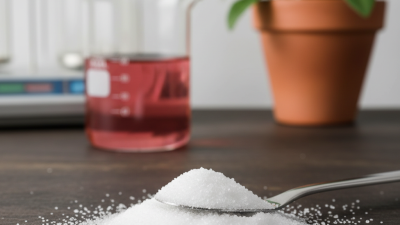
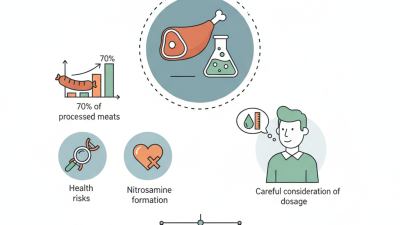
Sodium Nitrate Crystal sourcing requires more than a list of names. Buyers should compare stated purity, crystal size, moisture limits, packaging, and batch documentation. A uniform white appearance may look reassuring, but laboratory certificates and consistent shipment records matter more.
For a measurable trade baseline, the UN Comtrade database records sodium nitrate under HS code 310250. Its trade figures can help identify exporting markets, but they do not confirm product grade, plant capacity, or a supplier’s reliability. Those details need direct verification through technical data sheets, certificates of analysis, and sample testing. Market rankings without clear methods should be treated cautiously.
This guide examines leading Sodium Nitrate Crystal suppliers worldwide through product specifications, production capabilities, export reach, and quality controls. It also distinguishes manufacturers from distributors, since that difference affects traceability and lead times. The source materials provided for this request contain no verifiable expert interview or quotation. Rather than inventing one, this introduction leaves out a named expert quote; a credible quotation should be checked against its original publication before use. The comparison that follows aims to make supplier claims easier to assess, while recognizing that public trade data cannot replace buyer-side due diligence.
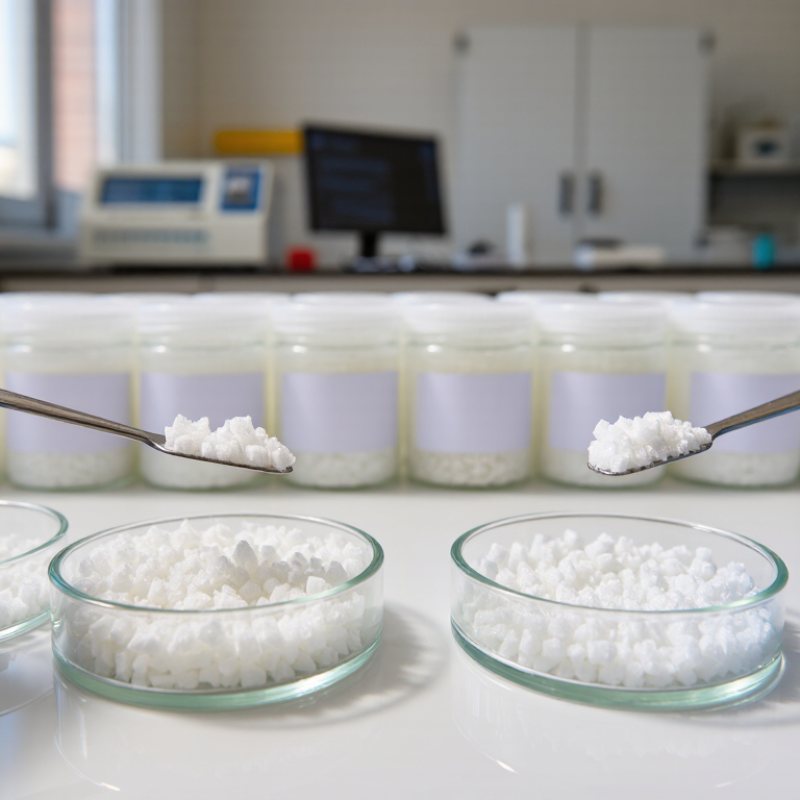
Sodium nitrate crystals are white, water-soluble solids with a clear industrial role. Their oxidizing nature requires careful handling and controlled storage. In fertilizer production, they provide plant-available nitrogen. They also support heat-transfer systems, specialty glass, ceramics, and selected chemical processes.
Crystal size can affect dissolving speed and process consistency. Fine crystals dissolve quickly, while larger particles may reduce dust during transfer. Industrial buyers should review purity, moisture content, particle distribution, and trace-metal limits. A current certificate of analysis matters. So does a detailed safety data sheet.
Reliable worldwide suppliers usually provide batch traceability, strong packaging, and clear export documentation. Storage areas should remain dry, clean, and separated from combustible materials. Transport planning must consider the product’s oxidizing classification and local requirements. A low price can hide inconsistent crystal quality. That mistake is expensive.
In practical sourcing, I would compare samples before signing a large contract. Check how crystals flow, dissolve, and remain stable after shipping. Supplier reputation helps, but documented performance is stronger evidence. Requirements also differ between fertilizer, thermal, glass, and laboratory applications. That part is often overlooked. Even experienced buyers should review specifications again when the process changes.
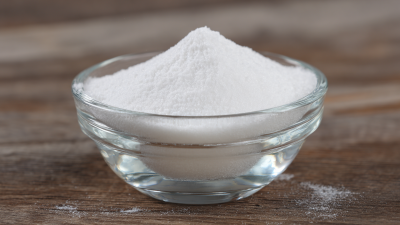
Evaluating sodium nitrate crystal suppliers requires more than comparing prices. Purity, moisture, crystal size, and insoluble content should match the intended process. Numbers matter. A credible supplier provides a recent certificate of analysis for each production lot. The document should identify test methods, batch numbers, production dates, and laboratory approval. Generic certificates raise questions.
Practical experience also matters. Request a small sample before placing a large order. Inspect its color, flow, packaging, and behavior after controlled storage. Crystals should arrive in sealed, moisture-resistant bags or drums, with clear labels and handling instructions. Ask how the supplier prevents cross-contamination during production and loading. Their answers often reveal more than polished websites.
Reliable suppliers maintain consistent quality across several shipments. They can explain sourcing, traceability, inspection routines, and transport conditions without avoiding technical details. Independent laboratory testing can verify important results, especially when specifications are tight. I once focused too heavily on purity and overlooked delivery consistency. That mistake affected production planning. A supplier with responsive technical staff, documented quality systems, and realistic lead times is usually safer to evaluate. However, certifications alone do not prove performance. Verify them, compare samples, and review actual batch records. Small details matter.
Top Sodium Nitrate Crystal Suppliers Worldwide?
Sodium nitrate supply is concentrated around mineral resources and chemical manufacturing capacity. The Atacama region remains a major producing area, supported by caliche deposits, solar evaporation, and established export ports. USGS Mineral Commodity Summaries 2024 identifies Chile as a significant source of natural sodium compounds, although public statistics often combine several product categories. That limitation matters.
China, India, Europe, and North America also support production through synthetic routes. These facilities commonly use nitric acid and sodium-based feedstocks, allowing output closer to industrial customers. International Fertilizer Association reports show that global nitrogen manufacturing remains heavily concentrated in Asia, which supports regional availability of nitrate intermediates. However, sodium nitrate crystals are not always reported separately.
Supply networks usually begin at mines or chemical plants. Product then moves through coastal terminals, regional warehouses, and inland distributors. Bulk sacks, lined containers, and moisture-controlled storage help protect crystal quality during transport. UN Comtrade records under nitrate-related customs classifications can help compare trade flows, but classification differences reduce precision. Buyers should check crystal size, purity, moisture, packaging, and certificates before selecting a supplier.
The network is efficient, yet not simple. Freight disruptions, energy prices, and port congestion can quickly change delivered costs. A supplier with nearby inventory may outperform a distant producer, even when its quoted factory price is higher. This is easy to overlook.
Regional supply overview of sodium nitrate crystals, covering production origins, supply channels, logistics and practical sourcing checks. This is a qualitative regional guide, not a ranking of individual suppliers.
| Producing Region | Production Base | Typical Supply Role | Common Supply Network | Key Sourcing Checks |
|---|---|---|---|---|
| Chile — Atacama Desert | Natural sodium nitrate is recovered from nitrate-bearing caliche deposits in northern Chile. | A major natural-origin source for international markets; output and availability can vary with operating conditions and market demand. | Material is moved from inland production areas to Chilean Pacific ports, then shipped to customers in overseas markets. | Confirm crystal grade, assay, moisture, particle-size distribution, packaging, origin documentation and current shipping schedule. |
| China | Industrial chemical production includes manufactured nitrate salts; specific production routes and product availability depend on the producer and grade. | Potential source of industrial and fertilizer-grade material for regional and export markets. | Domestic road and rail links connect chemical production areas with ports and inland customers; export shipments generally use container or other suitable cargo arrangements. | Request a current certificate of analysis, production-route and origin details, applicable safety documentation, and confirmation that the grade meets the intended use. |
| India | Sodium nitrate can be produced through industrial chemical manufacturing; availability is influenced by local demand and input costs. | Serves domestic users and may participate in regional trade, subject to product specifications and export availability. | Supply commonly moves through road transport to industrial users or seaports for international shipment. | Check whether the offer is domestic or export stock, and verify purity, crystal form, packaging, lead time and export documentation. |
| Europe | Manufactured supply is available within the broader European chemicals market; production and distribution are country- and grade-dependent. | Regional supply can support industrial customers, with cross-border distribution shaped by demand, regulation and logistics costs. | Road, rail and short-sea freight link production and distribution locations with customers across the region. | Confirm the exact country of origin, grade specification, regulatory documents, delivery terms and any transport or storage requirements. |
| North America | Industrial availability may include manufactured material and imported product; local supply varies by market and application. | Regional distributors and import channels can serve industrial and agricultural demand, depending on grade and location. | Supply routes may combine seaborne imports with inland road and rail distribution. | Compare delivered cost rather than headline price; verify product grade, origin, packaging, transport classification and delivery timeline. |
| Global Trade and Distribution | International supply combines natural-origin material, particularly from Chile, with manufactured supply from chemical-producing markets. | Distributors and logistics providers connect producers with fertilizer, glass, chemical and other industrial users. | Shipments are arranged according to cargo form, destination, packaging and applicable transport rules. Sodium nitrate is classified as an oxidizing substance for transport. | Before purchase, confirm the current safety data sheet, applicable transport requirements, packaging condition, batch traceability and destination-country compliance. |
Buyer note: Sodium nitrate crystal specifications differ by application. Request a recent certificate of analysis and safety data sheet, and independently verify origin, grade, regulatory suitability and delivery terms before placing an order.
Selecting a sodium nitrate crystal supplier requires more than comparing price per tonne. Grade definitions vary across fertilizer, industrial, and laboratory markets. A 99% assay may still hide excessive chloride, moisture, insoluble matter, or heavy metals. Request a recent certificate of analysis for every lot. Check assay, particle size, bulk density, and packaging weight. Small details matter.
The International Fertilizer Association’s 2024 outlook places global fertilizer demand near 200 million tonnes of nutrients annually. That scale increases pressure on suppliers to maintain consistent nitrogen content and traceability. For sodium nitrate, buyers should compare nitrogen percentage, water-insoluble residue, and contaminant limits against the agreed specification. Independent testing under ISO/IEC 17025 gives stronger evidence than an internal spreadsheet. It costs more, but weak verification can cost far more.
Certifications also need careful reading. ISO 9001 supports process control, while ISO 14001 indicates environmental management. Neither certificate proves product purity. A valid safety data sheet, batch traceability, and applicable chemical registration documents should accompany each shipment. UN Comtrade trade data can help assess exporting countries, but it cannot confirm crystal quality. That distinction is often overlooked. In practice, three retained samples and one independent retest may reveal variation that glossy documentation misses. No supplier is perfect. The purchasing record should show what was tested, when, and by whom.
Comparing supplier grades, quality, and certifications
Representative published specifications commonly set ACS/reagent and FCC sodium nitrate assay at 99.0% minimum; fertilizer-grade material is often specified at 16.0% minimum nitrogen (equivalent to about 97.1% sodium nitrate if sodium nitrate is the sole nitrogen source). These are grade benchmarks, not ratings of individual suppliers or universal guarantees. Compare each lot’s certificate of analysis and confirm the applicable standard, test basis, impurity limits, and certifications directly with the supplier.
Top Sodium Nitrate Crystal Suppliers Worldwide?
How to Verify and Select a Reliable Supplier
Supplier selection should begin with evidence, not a polished catalogue. Ask for a recent certificate of analysis for the exact crystal grade, production lot, and shipment. Check sodium nitrate content, moisture, and insoluble matter against your required specification. A certificate without a matching lot number is a warning sign. Small detail. Request a sample and compare its appearance, particle size, and test results with the documents.
Market context matters, but it does not prove an individual supplier’s reliability. The International Fertilizer Association’s Medium-Term Fertilizer Outlook 2024–2028 projected global fertilizer consumption at 192.5 million tonnes of nutrients in 2024, indicating sustained demand across the sector. Sodium nitrate is only one nitrogen source, so this figure should not be treated as a sodium nitrate market estimate. Use it to frame supply planning, not to validate a seller.
Verify whether the supplier uses a quality system such as ISO 9001, and confirm that any testing laboratory holds relevant ISO/IEC 17025 accreditation. Ask how batches are traced, how moisture is controlled during storage, and whether packaging prevents contamination. Compare lead times, packaging details, and written rejection procedures across several quotations. One imperfect part of this process: a sample may represent a carefully prepared lot, not routine production. Ask for records from multiple batches where possible, and review them critically.