Understanding Ammonium Nitrate Fuel Oil: Uses, Risks, and Safety Guidelines
Ammonium Nitrate Fuel Oil (ANFO) is a widely utilized explosive blend comprising ammonium nitrate and fuel oil, primarily in the mining and construction industries. This potent combination is favored due to its effectiveness in various blasting operations, where it serves as a critical agent for breaking rock and facilitating excavation. However, the use of ANFO also brings significant risks, necessitating a comprehensive understanding of its properties, handling protocols, and safety measures to mitigate potential hazards.
In recent years, there has been an increased focus on the safety and regulatory aspects surrounding ANFO usage, given its potential for misuse and the devastating consequences that can arise from improper handling. This has led to the establishment of stringent safety guidelines aimed at ensuring that all personnel involved in the use of Ammonium Nitrate Fuel Oil are adequately trained and equipped to manage both the explosive nature and the environmental impacts associated with its application.
As we delve deeper into the characteristics, applications, and precautions of Ammonium Nitrate Fuel Oil, it becomes clear that responsible management and an informed approach are essential for harnessing its benefits while safeguarding human health and the environment. Ensuring adherence to safety practices and regulations is paramount to minimizing risks and promoting safe operations within industries reliant on this powerful explosive.

Ammonium Nitrate Fuel Oil: A Comprehensive Overview
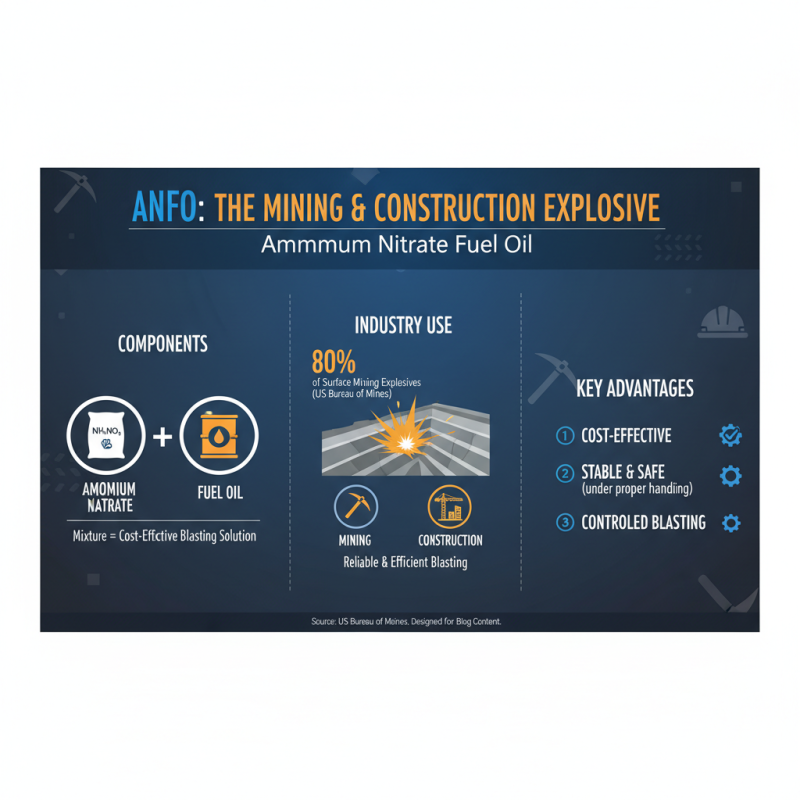
Ammonium Nitrate Fuel Oil (ANFO) is a widely used explosive material in various industries, particularly in mining and construction. ANFO is a mixture of ammonium nitrate and fuel oil, offering a cost-effective solution for blasting operations. According to the U.S. Bureau of Mines, ANFO accounts for nearly 80% of all explosives used in surface mining due to its efficacy and stability. Its reliable performance makes it the preferred choice where controlled blasting is essential for safety and operational efficiency.
However, despite its advantages, ANFO poses significant risks if not handled correctly. The material is sensitive to shock and can be hazardous in hot or confined environments. A report from the National Institute for Occupational Safety and Health (NIOSH) highlights that improper storage and handling can lead to catastrophic outcomes, including detonation and environmental hazards. Therefore, it is crucial to follow stringent safety guidelines and regulations when working with ANFO.
**Tips:**
- Always store ANFO in cool, dry locations away from any potential heat sources or acids, to prevent accidental decomposition.
- Ensure that all personnel involved in blasting operations are adequately trained in handling explosives and aware of the emergency protocols.
- Regularly inspect storage facilities and transportation methods to ensure compliance with safety standards established by regulatory bodies.
Key Applications of Ammonium Nitrate Fuel Oil in Industry
Ammonium Nitrate Fuel Oil (ANFO) is a widely used explosive in the mining and construction industries. It is a mixture of ammonium nitrate and fuel oil, known for its efficiency and cost-effectiveness. According to a report by the International Council on Mining and Metals (ICMM), ANFO accounts for approximately 80% of the explosives used in surface mining operations. Its key applications revolve around rock blasting and excavation, providing enhanced fragmentation of materials, which is crucial for both operational efficiency and safety.
The versatility of ANFO makes it suitable for various industrial applications, including quarrying, road construction, and tunneling. The properties of ANFO allow for practical handling and deployment, which is why it has gained prominence in large-scale civil engineering projects. Furthermore, the material's high energy output and relatively stable characteristics under standard conditions make it a reliable choice. According to the Mining Industry Statistics report, the global ANFO market is expected to witness significant growth, driven by increasing demand from emerging economies.
Tips: When working with ANFO, always ensure proper storage conditions to minimize risks. Temperature control and humidity management are essential to maintain the integrity of the explosive. Additionally, regular training for personnel handling ANFO can significantly reduce the likelihood of accidents, reinforcing safe handling practices in compliance with industry standards.
Identifying the Potential Risks Associated with Ammonium Nitrate Fuel Oil
Ammonium Nitrate Fuel Oil (ANFO) is widely used in the mining and construction industries as an explosive due to its effective energy release and relatively low cost. However, it poses significant risks that must be understood to ensure safe handling and storage. One of the primary concerns is its sensitivity to heat and shock; any sudden impact or high temperature can result in an uncontrolled detonation, leading to catastrophic outcomes. Operators must be trained to recognize the signs of potential hazards, including improper storage conditions and the presence of incompatible materials nearby.
Additionally, the environmental risks associated with ANFO cannot be overlooked. In cases of leaks or spillage, ammonium nitrate can contaminate groundwater and soil, posing a threat to ecosystems and human health. The chemical's solubility means it can easily wash away during rain, transporting harmful nitrates into local waterways. Regulators emphasize the need for strict adherence to safety guidelines, such as using proper storage containers and implementing spill response plans, to mitigate these potential environmental impacts. Enhanced awareness and rigorous safety measures are essential for anyone involved in the use of ANFO to navigate the inherent risks associated with this powerful explosive compound.
Ammonium Nitrate Fuel Oil Risks Analysis
This chart illustrates the potential risks associated with using Ammonium Nitrate Fuel Oil (ANFO) based on various categories including explosion risk, environmental impact, handling hazards, and storage concerns.
Essential Safety Guidelines for Handling Ammonium Nitrate Fuel Oil
Ammonium Nitrate Fuel Oil (ANFO) is widely utilized in the mining and construction industries due to its cost-effectiveness and efficiency as an explosive. However, handling ANFO requires strict adherence to safety guidelines to prevent accidents and ensure safe usage. According to the U.S. Department of Labor's Occupational Safety and Health Administration (OSHA), appropriate personal protective equipment (PPE) must be worn when handling ANFO, including gloves, goggles, and protective clothing. Additionally, workers should be trained in emergency response procedures in the event of spills or other hazardous incidents, underscoring the importance of preparedness.
Furthermore, storage conditions play a critical role in the safety of ANFO. The American Society for Testing and Materials (ASTM) recommends that ANFO be stored in cool, dry, and well-ventilated areas, away from heat sources and incompatible materials. A key point highlighted in industry reports indicates that temperature fluctuations can affect the stability of the materials, potentially increasing the risk of detonation. Regular inspections should also be conducted to monitor for any signs of deterioration or contamination. By following these essential safety guidelines, the risks associated with handling ammonium nitrate fuel oil can be significantly reduced, contributing to safer operational practices within the industry.
Regulatory Framework Governing the Use of Ammonium Nitrate Fuel Oil
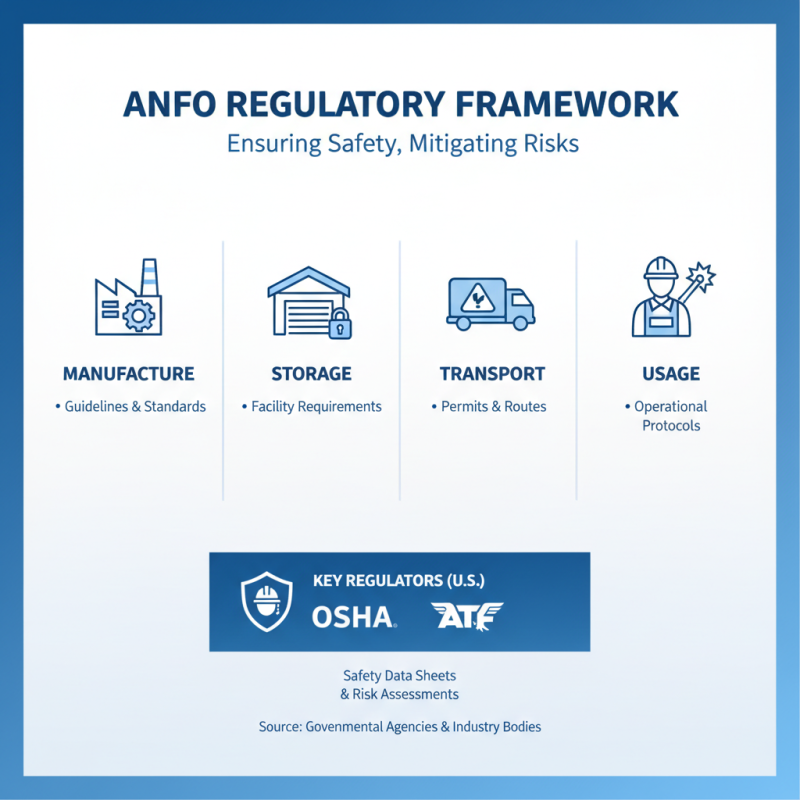
The regulatory framework governing the use of Ammonium Nitrate Fuel Oil (ANFO) is essential for ensuring safety and mitigating risks associated with this explosive material. Various governmental agencies and industry bodies have established guidelines to manage the manufacture, storage, transport, and usage of ANFO. For instance, in the United States, the Occupational Safety and Health Administration (OSHA) and the Bureau of Alcohol, Tobacco, Firearms and Explosives (ATF) impose strict regulations to govern explosive materials, highlighting the need for safety data sheets and detailed risk assessments.
According to a report by the International Society of Explosives Engineers, compliance with the established regulations is crucial in preventing accidental detonations and ensuring safe handling practices. The publication states that 70% of industrial incidents involving ANFO can be traced back to failure in adhering to safety protocols. Thus, detailed training and adherence to safety guidelines are not only regulatory requirements but also critical in promoting a safe working environment. Organizations must prioritize risk management strategies, maintaining clear communication and regular audits to prevent accidents and ensure compliance with state and federal laws.
Furthermore, the environmental regulations associated with ANFO usage cannot be overlooked. For instance, the Environmental Protection Agency (EPA) imposes restrictions on the release of potentially harmful substances during the production and application phases. This oversight is pivotal for minimizing the ecological footprint of blasting operations, as studies indicate that improper management can lead to nitrate contamination in soil and water sources. Ensuring compliance with these regulations not only fosters a safer environment but also enhances the sustainability of explosive practices within the industry.