Leave Your Message
Global buyers need more than a short list of chemical names when evaluating Concentrated Nitric Acid in 2026. Product selection depends on concentration, purity, consistency, packaging, documentation, and supplier reliability. Commercial options may include standard industrial grades, high-purity grades, and specialized fuming grades. Each type serves different applications and risk profiles. The right choice is rarely the cheapest one.
This guide examines the main types available to international purchasers. It considers assay data, impurity limits, batch consistency, container compatibility, and shelf-life expectations. Buyers should review the certificate of analysis, safety data sheet, technical data sheet, and transport classification before placing an order. Regional labeling rules can also differ. Small paperwork gaps may delay an entire shipment.
Experienced procurement teams usually assess the producer’s quality system, audit history, and response time. They also confirm whether the supplier can support the required delivery region legally and safely. Responsible storage and handling arrangements must be established before purchase. This article does not replace professional chemical safety advice.
Some market comparisons remain imperfect. Published specifications may not reflect every production batch. Supplier claims may also require independent verification. A careful buyer should request recent documentation and clarify acceptance criteria in writing. Price matters, but reliability matters more.
The following overview helps global buyers compare Concentrated Nitric Acid types with greater confidence. It focuses on practical purchasing decisions, transparent verification, and compliance-minded supplier evaluation. The goal is not to promote one product. It is to support informed, lawful, and technically sound sourcing.
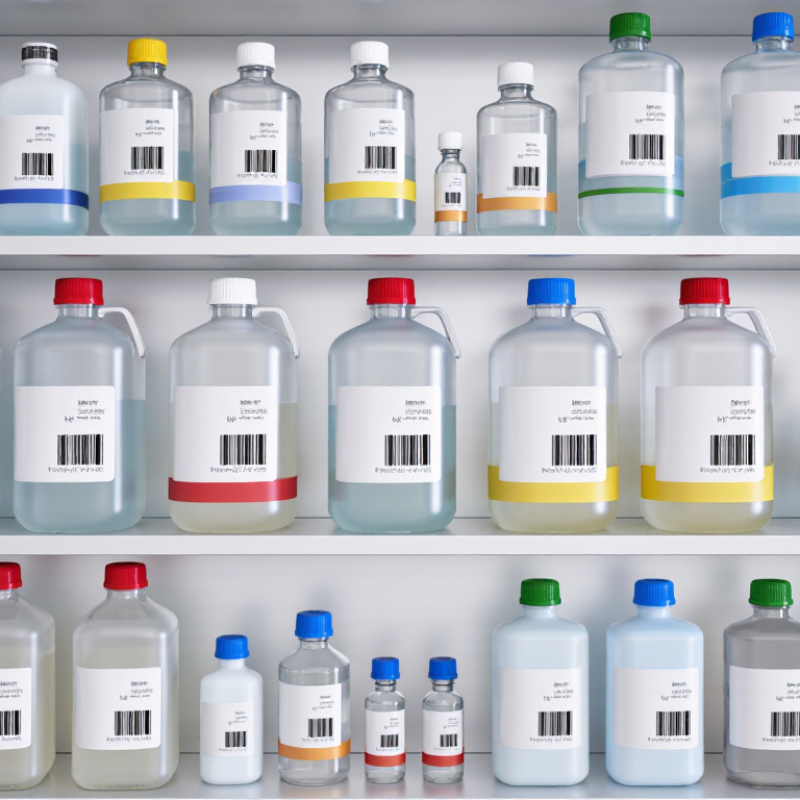
Concentrated nitric acid is an aqueous solution containing a high percentage of HNO3, usually above 68% by mass. Commercial buyers commonly encounter 55–68% grades, 68–70% azeotropic acid, and higher-strength fuming grades. The 68.4% azeotrope is important because ordinary distillation cannot easily increase its concentration at atmospheric pressure. The NIST Chemistry WebBook lists nitric acid’s molecular weight as 63.01 g/mol.
Grade selection depends on process control, not only concentration. Around 68% acid has a density near 1.41 g/mL at 20°C and boils close to 121°C, according to data summarized in the PubChem and NIST chemistry databases. Higher-strength acid is more volatile and reacts more aggressively with organic materials. It may also release nitrogen oxides after heat, light exposure, or contamination. The US EPA AP-42 guidance identifies nitric acid production and handling as significant NOx emission points. I would not treat a “high-purity” label as sufficient evidence. Water content, chloride, iron, and appearance still need verification.
Tips: Request a recent certificate of analysis, density data, and packaging compatibility records. Check concentration using an approved laboratory method. Avoid relying on color alone; slight yellowing can indicate dissolved nitrogen oxides. Purchasing teams often overlook temperature history. That is a costly gap. Tank material, vent design, and delivery temperature should match the supplier’s safety documentation and the receiving site’s engineering review.
| Product Type / Grade | Typical HNO₃ Concentration | Appearance | Key Properties | Common Applications | Buyer Considerations | Transport & Storage Notes |
|---|---|---|---|---|---|---|
| Concentrated Nitric Acid, Aqueous | Usually about 65–68% by mass | Clear to slightly yellow liquid | Strong mineral acid and powerful oxidizer; molecular formula HNO₃; relative molecular mass approximately 63.01 g/mol. The approximately 68% composition is close to the atmospheric-pressure nitric acid–water azeotropic region. | Nitrate production, metal treatment, mineral processing, laboratory synthesis, and manufacture of nitrogen-containing chemicals | Confirm concentration basis, permitted impurities, density, color, acid strength, and certificate-of-analysis requirements. | Use compatible, properly vented containers and keep away from organic materials, reducing agents, bases, and combustible substances. |
| Technical Grade | Commonly 55–68% by mass, depending on specification | Clear, pale yellow, or yellow liquid | Suitable for industrial processing where trace-metal and color limits are less stringent than analytical or electronic grades. | Fertilizer intermediates, industrial nitration, metal pickling, surface treatment, and general chemical manufacturing | Usually the most cost-sensitive option; buyers should specify maximum chloride, sulfate, iron, heavy metals, and insoluble matter where relevant. | Packaging, tank materials, and transport classification must be selected according to concentration and applicable dangerous-goods regulations. |
| Reagent / Analytical Grade | Typically about 65–70% by mass, subject to the applicable specification | Clear and colorless to very slightly yellow | Tighter limits for trace impurities than technical grade; commonly used when reproducible analytical performance is required. | Analytical testing, sample digestion, laboratory synthesis, quality control, and preparation of nitrate solutions | Request the exact specification, assay method, trace-metal limits, chloride limit, sulfate limit, and shelf-life information. | Store in a cool, dry, well-ventilated area with secondary containment; avoid exposure to heat and direct sunlight. |
| Electronic / Ultra-High-Purity Grade | Often around 65–70% by mass, with grade-specific concentration control | Colorless, particle-controlled liquid | Designed for very low metallic, ionic, particulate, and organic contamination; purity requirements are generally tighter than standard reagent grade. | Semiconductor wafer cleaning, microelectronics processing, and other contamination-sensitive operations | Evaluate trace-metal data, particle specifications, packaging cleanliness, lot traceability, and point-of-use handling procedures. | Use validated high-purity containers and dedicated handling equipment; prevent contamination from tools, closures, and transfer lines. |
| White Fuming Nitric Acid | Generally above 86% by mass; exact concentration varies by specification | Colorless to pale yellow, strongly fuming liquid | Higher acid concentration and vapor pressure than ordinary concentrated nitric acid; fumes are primarily associated with nitric acid vapor and nitrogen oxides formed during storage or handling. | Specialized nitration chemistry, energetic-material processing, and high-strength oxidation applications | Requires careful control of water content, dissolved nitrogen oxides, acidity, container compatibility, and temperature exposure. | Particularly corrosive and oxidizing; use purpose-designed packaging, ventilation, remote handling where appropriate, and strict segregation from incompatible materials. |
| Red Fuming Nitric Acid | Usually high-strength nitric acid containing substantial dissolved nitrogen oxides | Red, orange, or reddish-brown fuming liquid | Color is caused mainly by dissolved nitrogen dioxide and related nitrogen oxides. It is highly corrosive, strongly oxidizing, and more hazardous to handle than ordinary aqueous concentrated nitric acid. | Specialized propulsion research, energetic-material applications, and controlled high-energy oxidation processes | Confirm nitrogen-oxide content, water content, stability requirements, compatibility data, and authorization for the intended end use. | Requires closed, compatible systems, effective off-gas control, emergency planning, and strict separation from fuels, organics, metals, and reducing agents. |
| Low-Chloride Concentrated Nitric Acid | Often about 65–68% by mass | Clear to pale yellow liquid | Concentration is similar to standard concentrated nitric acid, but the specification places particular emphasis on low chloride contamination. | Corrosion-sensitive metal processing, analytical work, specialty chemical production, and applications affected by chloride ions | Specify the chloride maximum in mg/kg or equivalent units and request batch test results rather than relying only on a general grade name. | Avoid contact with chloride-contaminated equipment and use compatible materials that preserve the required impurity profile. |
| Low-Metal Concentrated Nitric Acid | Commonly about 65–68% by mass | Clear, colorless to slightly yellow liquid | Controlled limits for iron, copper, nickel, chromium, lead, and other trace metals; intended for processes where metallic contamination can affect yield or product quality. | High-purity inorganic synthesis, analytical digestion, surface treatment, and contamination-sensitive manufacturing | Compare individual metal limits, total metal limits, analytical methods, packaging materials, and lot-to-lot consistency. | Use clean, compatible transfer systems and keep containers tightly closed to reduce contamination and vapor release. |
| General Core Properties of Concentrated HNO₃ | Commercially concentrated material is commonly near 68% by mass | Clear to yellow liquid; may fume at higher concentrations | CAS number 7697-37-2; density depends strongly on concentration and temperature, with approximately 1.4–1.5 g/cm³ typical for concentrated aqueous material. It is corrosive, oxidizing, and miscible with water with significant heat release. | Used across fertilizers, nitration, metal treatment, laboratories, pharmaceuticals, electronics, and specialty chemical production | Compare concentration, density, impurity limits, packaging, regulatory documentation, and emergency-response requirements as one purchasing specification. | Keep away from combustibles, organic chemicals, powdered metals, bases, reducing agents, and materials that can react violently with oxidizing acids. |
| Safety Classification | Depends on concentration and local regulatory criteria | Not applicable | Concentrated nitric acid can cause severe skin and eye burns, releases corrosive vapors, and may intensify fire by supporting combustion of other materials. | Applies to all industrial, laboratory, and logistics uses | Buyers should obtain the current Safety Data Sheet, verify local occupational and environmental requirements, and confirm trained-user and emergency-response provisions. | Transport and storage must follow the applicable dangerous-goods rules, container standards, ventilation requirements, segregation rules, and site risk assessment. |