2025 Top Uses and Benefits of Industrial Sodium Nitrite in Various Industries
In the evolving landscape of industrial chemicals, Industrial Sodium Nitrite stands out due to its versatile applications across various sectors. Experts in the field have recognized the significant role that this compound plays in industries ranging from food preservation to pharmaceuticals. Dr. Emily Carter, a renowned chemist specializing in industrial chemicals, emphasizes its importance by stating, "Industrial Sodium Nitrite is not just a chemical; it’s a facilitator of safety and quality across multiple applications."
The benefits of Industrial Sodium Nitrite extend beyond its traditional uses, showcasing its potential to revolutionize manufacturing processes. From enhancing the quality of cured meats to its role in wastewater treatment, this compound remains indispensable in maintaining product integrity and promoting environmental sustainability. As industries navigate challenges related to quality control and safety standards, the demand for high-grade Industrial Sodium Nitrite continues to grow.
As we delve into the top uses and benefits of Industrial Sodium Nitrite in 2025, we will explore how its remarkable properties support innovation and efficiency across diverse industries. This overview will highlight the crucial relevance of this compound in shaping the future of industrial practices, confirming its status as a key player in the pursuit of excellence and sustainability.

Top Industrial Applications of Sodium Nitrite in 2025
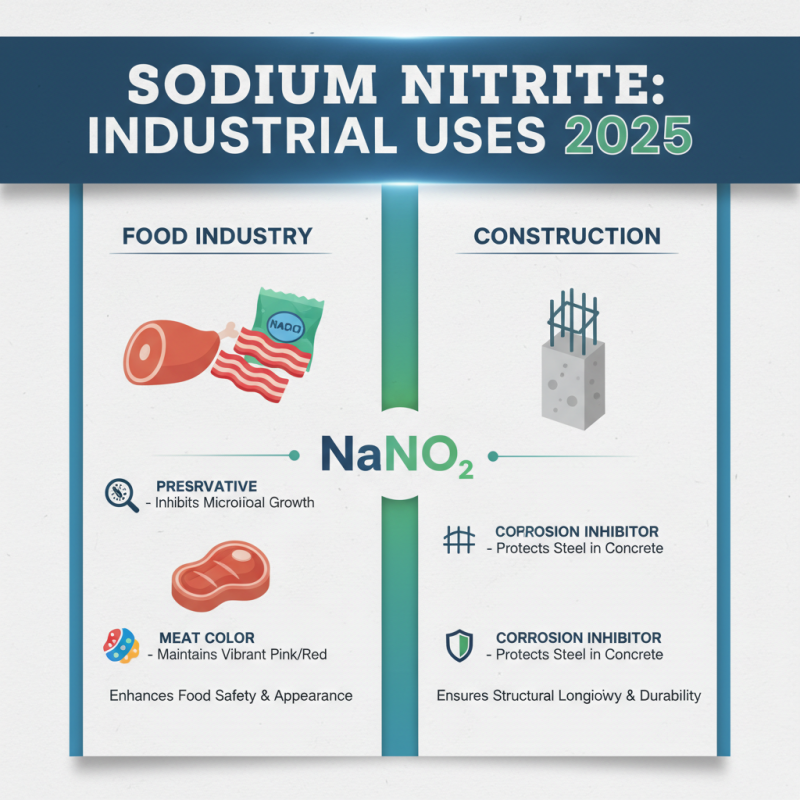
Sodium nitrite has proven to be an invaluable compound across various industrial applications in 2025. One of its primary uses is in the food industry, serving as a preservative that inhibits microbial growth and helps maintain the vibrant color of processed meats. This function not only enhances food safety but also contributes to aesthetic appeal, making sodium nitrite a staple in meat preservation. In construction, sodium nitrite is utilized as a corrosion inhibitor for reinforcing steel in concrete, ensuring the longevity and durability of structures.
Tips: When handling sodium nitrite, always ensure proper storage in a cool, dry place, and use appropriate personal protective equipment (PPE) to minimize exposure. This will help maintain safety and reduce the risk of potential hazards associated with improper handling.
Additionally, the pharmaceutical sector leverages sodium nitrite in the production of various medications, particularly in the treatment of certain medical conditions. Its capability to act as an oxygen-carrying agent has led to the development of vital pharmaceuticals that can assist patients in need.
Tips: Regular training and safety updates for personnel dealing with sodium nitrite can significantly enhance workplace safety protocols and compliance with health regulations. This proactive approach helps prevent accidents and ensures a smooth operational flow in industrial settings.
Sodium Nitrite as a Corrosion Inhibitor in Water Treatment Facilities
Sodium nitrite has gained significant attention as a corrosion inhibitor in water treatment facilities, playing a crucial role in maintaining the integrity of infrastructure. When introduced into cooling water systems and boiler feeds, sodium nitrite effectively prevents corrosion of metal surfaces, which is vital for the longevity and efficiency of these systems. Its ability to form a protective layer on the metal surfaces helps to mitigate the damaging effects of oxygen and other corrosive agents, ultimately leading to reduced maintenance costs and extended equipment lifespan.
Moreover, the effectiveness of sodium nitrite as a corrosion inhibitor is enhanced when combined with other treatment chemicals, creating a synergistic effect that further improves performance. This blend not only stabilizes pH levels but also enhances the overall treatment process, ensuring that water remains safe for industrial usage. As industries increasingly prioritize sustainability and efficiency, the incorporation of sodium nitrite in water treatment protocols represents a significant step forward in ensuring operational reliability and environmental compliance. Its widespread use underscores the growing importance of innovative chemical solutions in addressing the challenges posed by corrosion in water facilities.
Role of Sodium Nitrite in Food Preservation and Safety Standards
Sodium nitrite plays a pivotal role in food preservation, particularly within the meat processing industry. As a powerful curing agent, it not only imparts a distinct flavor and appealing color to meat products but also serves as an effective inhibitor of harmful bacteria. Specifically, sodium nitrite is known to combat Clostridium botulinum, the bacterium responsible for botulism, ensuring the safety of cured meats. By creating an unfavorable environment for pathogens, it significantly enhances the shelf life of products while maintaining their quality.
In recent years, safety standards surrounding sodium nitrite use have evolved, reflecting growing consumer awareness and regulatory scrutiny. Authorities have set stringent limits on the allowable levels of sodium nitrite in food products, aiming to balance the preservation benefits with potential health risks. This regulatory framework is crucial as it guides manufacturers in implementing safe practices while utilizing sodium nitrite effectively. Consequently, understanding these safety standards is essential for industry stakeholders, as compliance ensures not only the safety of food products but also maintains consumer trust in their brand and offerings. Through proper application and adherence to these guidelines, sodium nitrite will continue to be an indispensable element in food preservation strategies.
2025 Top Uses and Benefits of Industrial Sodium Nitrite
Sodium Nitrite in the Production of Pharmaceuticals and Chemical Syntheses
Sodium nitrite is gaining recognition as a crucial reagent in the pharmaceutical and chemical synthesis sectors. Its primary role in the synthesis of various active pharmaceutical ingredients (APIs) underscores its importance in drug development. The compound acts as a versatile nitrosating agent, enabling the formation of nitroso compounds, which are integral to a variety of therapeutic agents. Through controlled reactions, sodium nitrite contributes to the creation of complex molecular structures, thereby facilitating innovations in medicine and improving the efficiency of drug formulations.
In the realm of chemical syntheses, sodium nitrite is employed in numerous applications, such as the production of intermediates and specialty chemicals. Its ability to donate nitrogen allows for a myriad of transformations that are essential in crafting compounds used in dyes, explosives, and agricultural chemicals. The compound's efficacy in synthesizing aromatic compounds makes it a valued asset in organic chemistry, supporting processes that can enhance product yield and purity.
As industries continue to explore the benefits of sodium nitrite, its role in advancing chemical synthesis methods and pharmaceutical breakthroughs is likely to expand, paving the way for new applications and innovations in various fields.
Environmental Impact and Sustainability Considerations of Sodium Nitrite Use
The use of sodium nitrite across various industries offers notable benefits, but it also raises important environmental and sustainability concerns. In agricultural practices, sodium nitrite is used as a preservative and color fixative in cured meats; however, its application can lead to soil and water contamination. When excess sodium nitrite is released into the environment, it can form nitrosamines, compounds that are known to pose health risks to both humans and wildlife. Thus, industries must practice careful management to minimize emissions and prevent leaching into water sources.
From a sustainability perspective, the challenge lies in balancing the advantages of sodium nitrite with its ecological impact. Innovative practices, such as improved monitoring systems and bioremediation techniques, may help mitigate negative effects. Moreover, industries are encouraged to explore alternative methods and substances that can achieve similar results without compromising environmental health. This shift towards greener solutions not only enhances corporate responsibility but also aligns with the increasing global emphasis on sustainable practices, ensuring that the benefits derived from sodium nitrite usage do not come at the expense of ecosystem integrity.
2025 Top Uses and Benefits of Industrial Sodium Nitrite in Various Industries - Environmental Impact and Sustainability Considerations of Sodium Nitrite Use
| Industry |
Primary Use |
Benefits |
Environmental Impact |
Sustainability Considerations |
| Food Processing |
Preservative |
Extended shelf life, prevention of botulism |
Potential toxicity if mismanaged |
Regulated use, alternative preservatives being explored |
| Pharmaceutical |
Intermediates in drug synthesis |
Essential for specific medications |
Requires careful disposal |
Focus on reducing waste byproducts |
| Chemical Manufacturing |
Corrosion inhibitor |
Prevents metal degradation |
Forming nitrous oxides if released |
Adoption of closed systems to minimize emissions |
| Textile Industry |
Dye fixing agent |
Improves color fastness |
Chemical exposure concerns |
Research into natural alternatives |
| Water Treatment |
Dechlorination agent |
Improves water quality for consumption |
Contamination concerns if overused |
Monitoring and optimizing dosage |